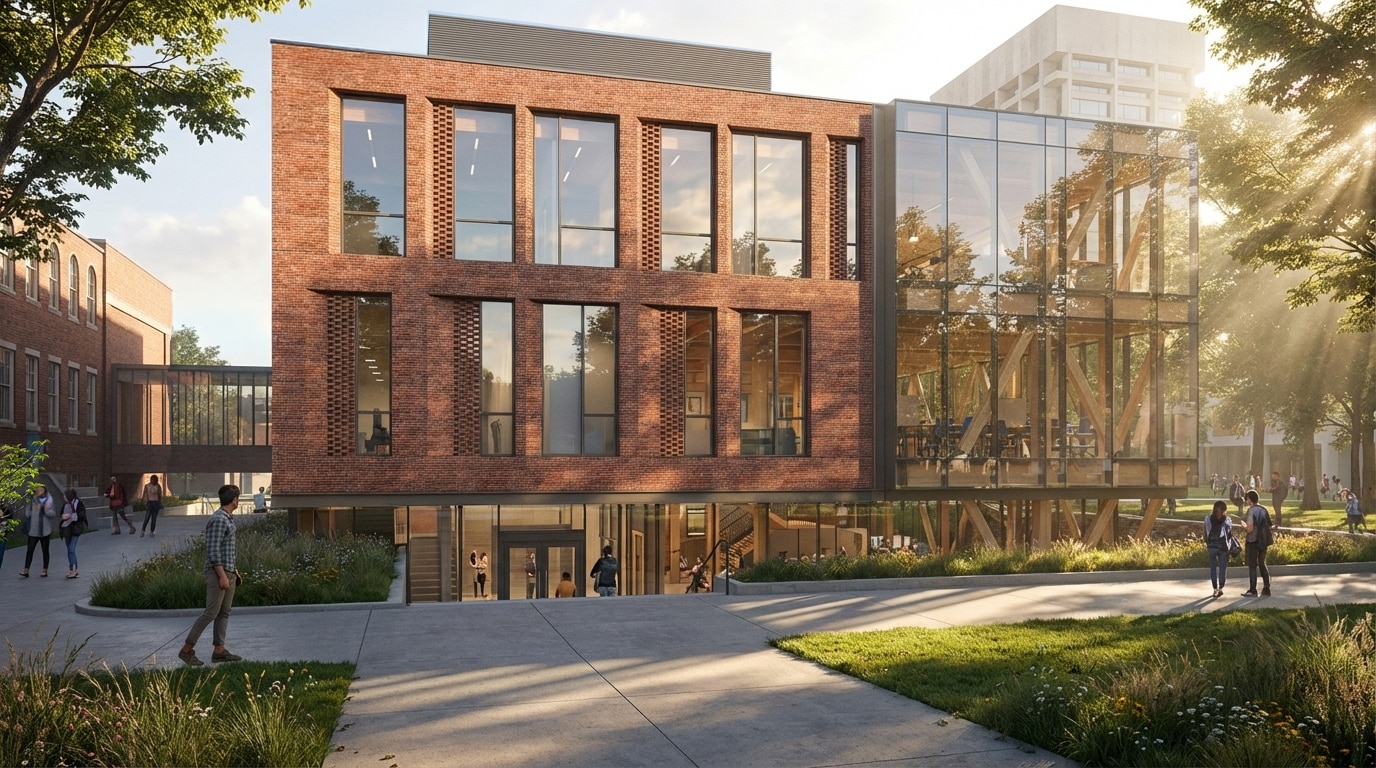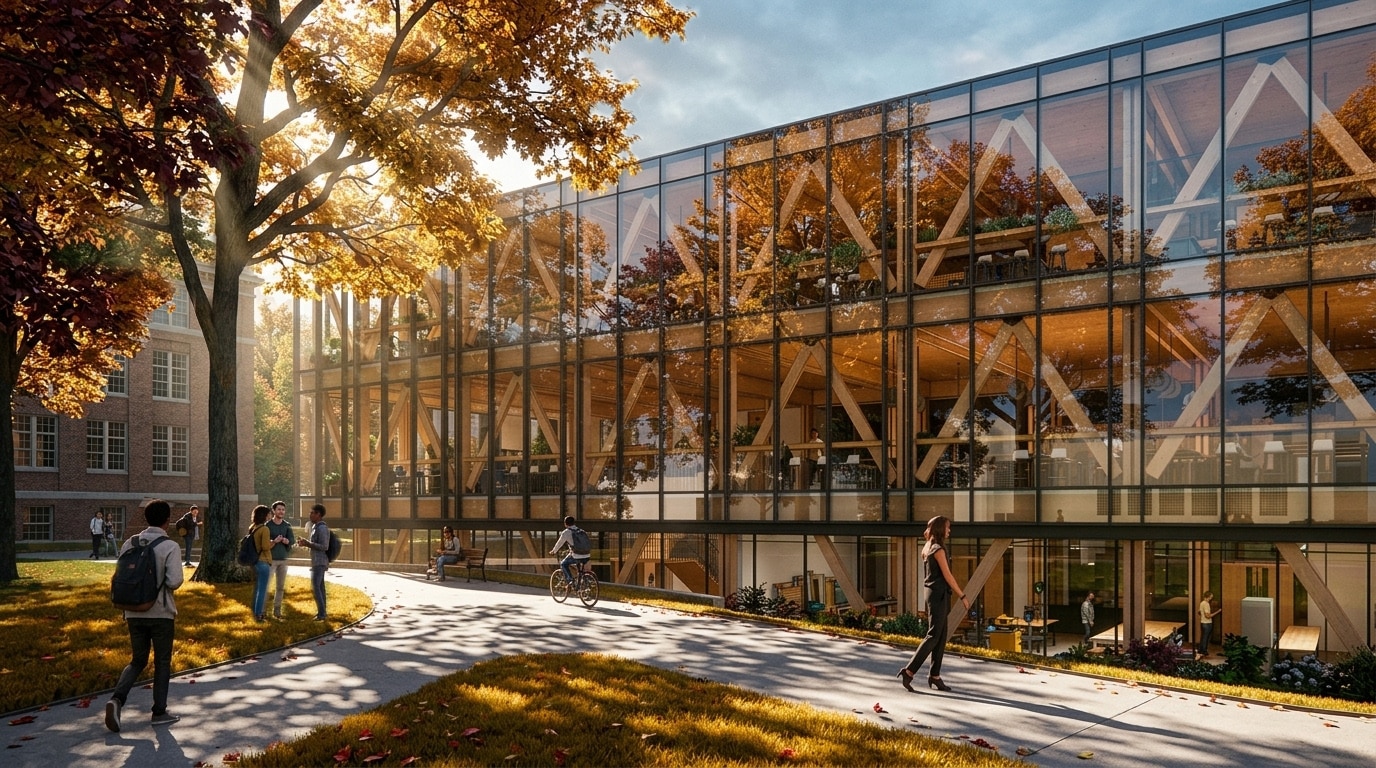
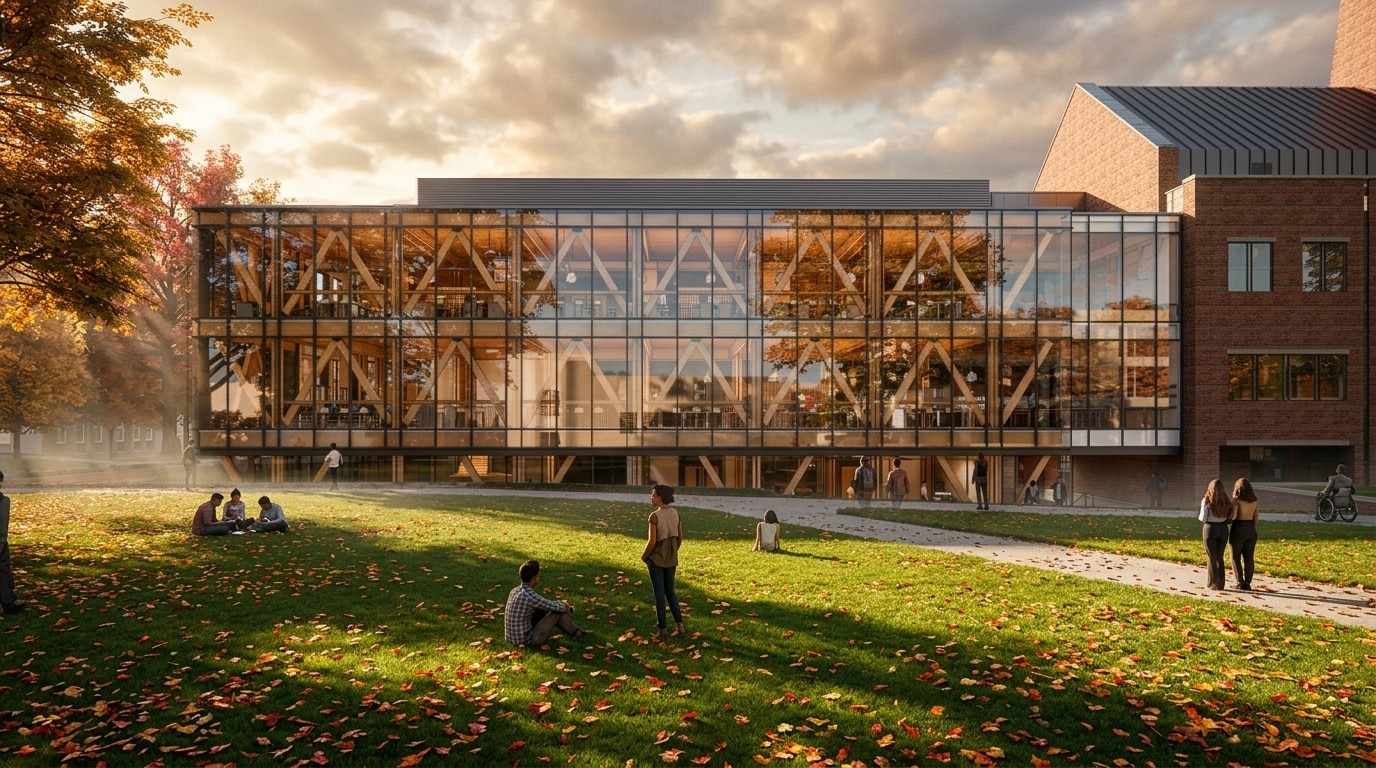
The Pigman College of Engineering Makerspace Building will provide a connection within the engineering quad to the Anderson building. With transparent/glass exteriors, the new building offers an active connection to the outdoors, bringing together specialized learning, collaboration, and support spaces within a flexible academic environment. At its core, STEM makerspaces and state-of-the-art fabrication shops will allow students to design, experiment, test ideas, and move from concept to prototype in one location. Senior design labs will support advanced and capstone-level projects, while adaptable instructional areas will accommodate group learning, project teams, demonstrations, and specialized activities.
Designed for enrolled students and community users, the building will support varied teaching methods and engagement opportunities. Informal study and collaboration areas will extend learning beyond scheduled classes, connecting academic, social, and project-based activities. Dedicated student organization spaces will provide places to meet, plan events, and build community.
Faculty, mentor, and staff offices will encourage communication, collaboration, and access to student support. Together with the labs, instructional spaces, and common areas, these functions will create a cohesive environment supporting both structured teaching and informal interaction.
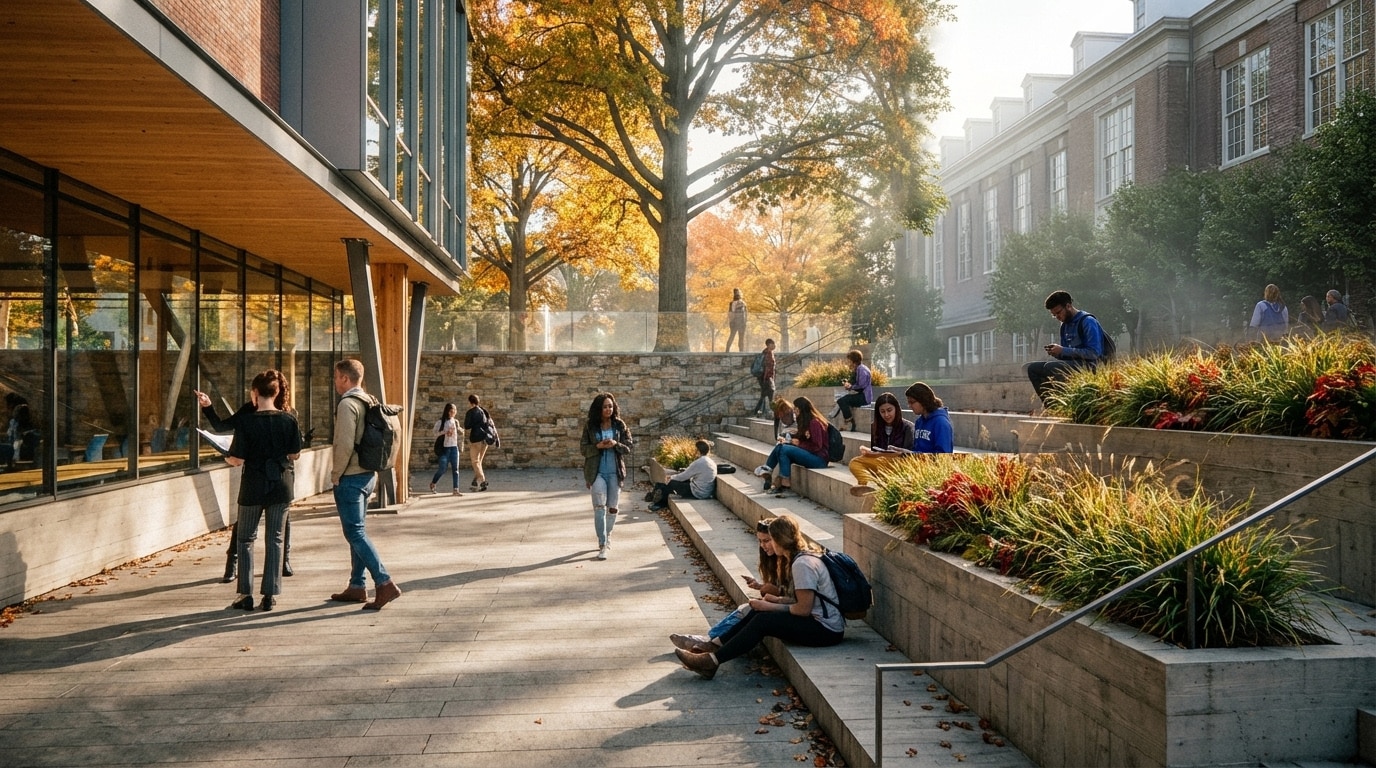
Exterior areas will expand the building’s educational and community functions, providing settings for hands-on learning, small-group work, social interaction, and events. These indoor-outdoor connections will support flexible programming while strengthening the building’s relationship to the campus.
The Makerspace Building will physically link to the existing Mechanical Engineering Building, creating a seamless extension of its academic programs and resources. Social stairs at the main entrance will establish a visible, active connection to the campus’s primary thoroughfare, while views toward the campus quad will reinforce the building’s place within the broader campus experience. These physical, social, and visual connections will position the building as a bridge between academic programs, students, faculty, campus life, and the surrounding community.